
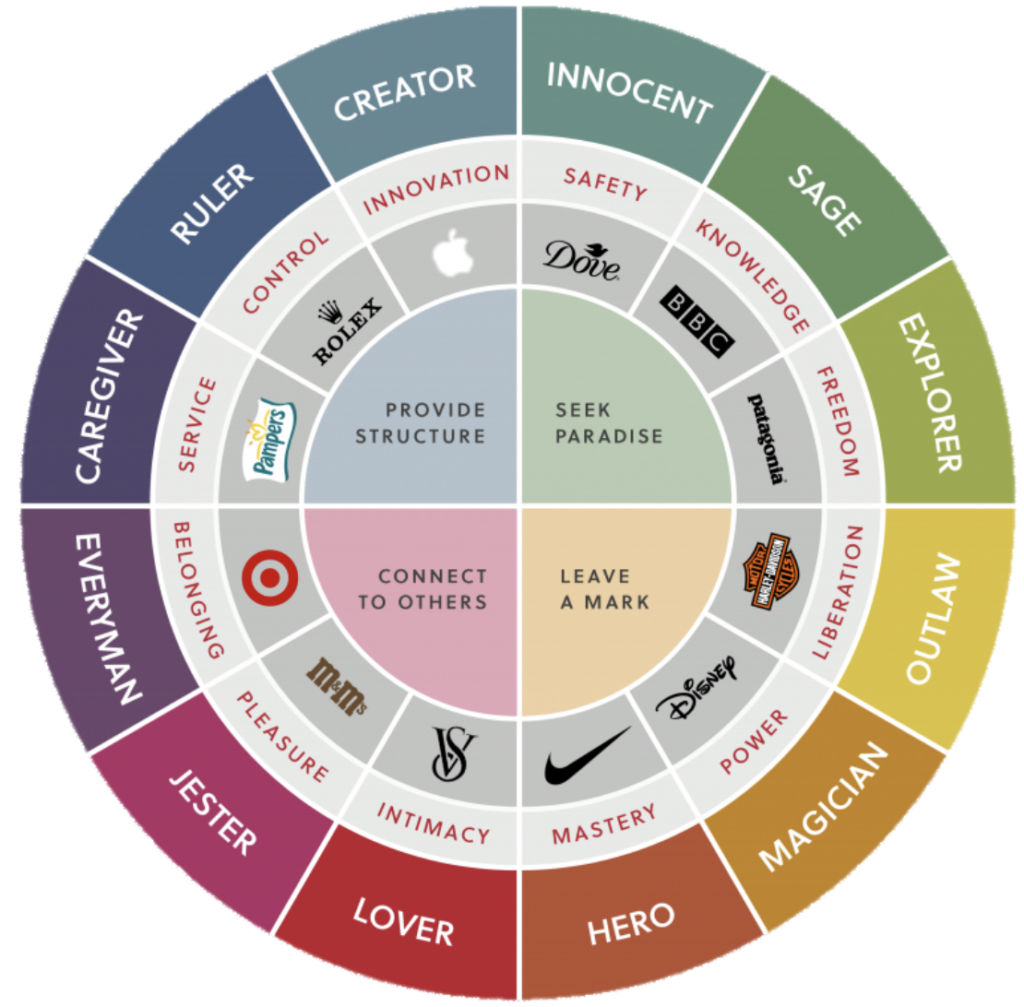
The 12 Brand Archetypes: The Secret Psychology Driving Australia’s Most Iconic Brands
Modern consumers are no longer satisfied with brands that simply offer a product at a fair price. Today, customers want to know what a business stands for, how it behaves, and whether it makes a positive contribution to the world. The rise of purpose-driven and ethical marketing marks a major shift in how brands compete. Instead of fighting for attention with bigger budgets or louder campaigns, brands are creating deeper loyalty by showing values, transparency, and integrity.
Purpose-driven marketing goes beyond messaging. It becomes the lens through which a brand operates—its cultural compass and commercial advantage. Companies that embed purpose into their identity attract more loyal customers, recruit better talent, maintain more consistent messaging, and build long-term trust.
One of the most effective frameworks for communicating that purpose in a way audiences instantly recognise is Carl Jung’s 12 Brand Archetypes. These archetypes reflect universal personalities and motivations that appear in stories, mythology, culture, and human psychology. When a brand consistently expresses one archetype, customers experience it as authentic, memorable, and emotionally meaningful.
Below, we explore each of Jung’s archetypes, how they connect with purpose-driven marketing, and an example of an Australian brand that embodies each one.
What Makes Purpose-Driven Marketing So Powerful?
Purpose-driven marketing enables brands to:
- Stand out in a crowded market
- Build trust through consistent behaviour
- Create emotional resonance with customers
- Become part of a consumer’s identity
- Make messaging feel meaningful, not promotional
Ethical marketing reinforces that purpose through real actions such as:
- Transparent sourcing
- Sustainability initiatives
- Fair representation
- Social responsibility
- Respect for customer data
- Community involvement
Together, purpose and ethical practice become a long-term competitive advantage—because customers are more likely to support brands that align with their values.
How Jung’s 12 Archetypes Express Purpose
1. The Innocent – “Doing the Right Thing”
Purpose: Honesty, transparency, purity, and trust.
Innocent brands present themselves as clean, simple, and genuinely good. Their messaging is uplifting, optimistic, and focused on removing complexity and anxiety from consumers’ lives.
Australian Example: Aesop
Aesop demonstrates the Innocent archetype through natural ingredients, minimalist design, responsible sourcing, and honest product claims. Their communication avoids hype and instead conveys calm, purity, and quiet confidence—exactly what Innocent customers value.
2. The Everyman – “Brands For People Like You and Me”
Purpose: Fairness, equality, belonging, and honesty.
These brands build comfort and community by showing that they are on the customer’s level—not above them. The Everyman rejects elitism and embraces relatability.
Australian Example: Aussie (Home Loans)
Aussie has successfully positioned itself as a friendly, approachable mortgage partner helping everyday Australians navigate home finance. Their tone is supportive, down-to-earth, and consumer-first, making financial decision-making feel less intimidating.
3. The Hero – “We Improve the World Through Action”
Purpose: Courage, service, achievement, and positive impact.
Hero brands don’t just claim purpose—they prove it with visible results. They help customers overcome real challenges and feel proud to support or participate in the mission.
Australian Example: Surf Life Saving Australia
Surf Life Saving embodies the Hero archetype with real-life, measurable community impact. Their work saves lives, educates the public, and enhances beach safety across the country. Their brand is built on action, courage, training, and service.
4. The Outlaw – “Challenging a Broken System”
Purpose: Disruption, rebellion, and redefining industry norms.
Outlaw brands fight a system they believe isn’t working—whether that means standing up for consumers, introducing fairer alternatives, or exposing industry misconduct.
Australian Example: ME Bank (original positioning)
ME Bank entered the market as a challenger to the big four banks, using bold, sometimes provocative campaigns that highlighted industry problems and promised simpler, fairer banking. Their tone positioned them as the customer’s advocate against entrenched financial power.
5. The Explorer – “Freedom, Discovery, and Possibility”
Purpose: Independence, adventure, self-expression, and curiosity.
Explorer brands celebrate open-mindedness and self-discovery. Their purpose is rooted in helping customers expand their horizons—physically, mentally, or creatively.
Australian Example: Kathmandu
Kathmandu has long positioned itself around outdoor adventure and environmental responsibility. Their purpose is not just to sell jackets but to empower people to explore the world responsibly, sustainably, and with confidence.
6. The Creator – “Innovation That Matters”
Purpose: Building new solutions, encouraging creativity, and improving the world through innovation.
Creator brands believe the world can be better—if we build better things. Their purpose is expressed through invention, design, problem-solving, and craftsmanship.
Australian Example: Atlassian
Atlassian exemplifies the Creator archetype by empowering teams to build technology that improves productivity, collaboration, and innovation. Their purpose is practical, global, and ethical, backed by transparent workplace culture and community commitment.
7. The Ruler – “Leadership, Stability, and Responsibility”
Purpose: Structure, authority, security, and high standards.
Ruler brands serve as leaders in their field. They provide reassurance, professionalism, and long-term confidence to customers seeking reliability and trust.
Australian Example: Commonwealth Bank
CBA communicates stability, security, and leadership in finance. Their branding reflects responsibility, governance, and consistent stewardship—qualities customers look for from a brand managing their financial wellbeing.
8. The Magician – “Transforming Life for the Better”
Purpose: Growth, transformation, and helping people achieve progress.
Magician brands move customers from where they are to where they’d rather be. Their purpose is based on empowerment—not illusion.
Australian Example: Afterpay
Afterpay changed the way Australians shop, turning traditional credit models into a transparent, consumer-controlled payment experience. Their communications focus on empowerment and accessibility while promoting responsible spending.
9. The Lover – “Deep Connection and Human Experience”
Purpose: Emotion, pleasure, intimacy, and meaningful relationships.
Lover brands connect deeply with the senses and emotions, helping customers feel loved, appreciated, indulged, or valued.
Australian Example: Cadbury
Cadbury Australia leans heavily on heartfelt storytelling—sharing chocolate as a way of celebrating love, generosity, and connection. Their campaigns use emotion to transform a simple treat into a shared experience.
10. The Caregiver – “Protecting and Supporting Others”
Purpose: Compassion, service, safety, and wellbeing.
Caregiver brands exist to help the vulnerable, uplift communities, and improve quality of life.
Australian Example: St John Ambulance Australia
St John Ambulance provides medical support, first-aid education, emergency care, and community services across the nation. Their brand purpose is entirely focused on protecting people and supporting public health.
11. The Jester – “Bringing Joy and Lightness”
Purpose: Fun, entertainment, humour, and positivity.
Jester brands remind people not to take life—or themselves—too seriously. They cut through the clutter with wit, charm, and playfulness.
Australian Example: Victoria Bitter (VB)
VB’s iconic campaigns, such as “Hard Earned Thirst,” use humour, everyday situations, and cultural references to connect with Australians. The brand doesn’t lecture—it entertains, using humour responsibly to make itself memorable without belittling anyone.
12. The Sage – “Truth, Education, and Understanding”
Purpose: Knowledge, insight, guidance, and clarity.
Sage brands help people make better decisions through truth and expertise. Their value lies in credibility and informed perspective—not persuasion.
Australian Example: ABC (Australian Broadcasting Corporation)
The ABC represents the Sage archetype with a mission grounded in journalism, education, public service, and integrity. Their purpose is not to sell, but to inform and support democratic understanding.
Why Archetypes Make Purpose More Powerful
Combining Jung’s archetypes with purpose-driven marketing gives brands several advantages:
1. Customers instinctively “get” the brand
Archetypes tap into universal psychology, making the brand feel familiar and meaningful.
2. Communication becomes consistent
Messaging, tone, visual identity, and brand decisions align around one personality.
3. Purpose becomes emotional—not corporate
People rarely fall in love with mission statements.
But they connect with characters, stories, and values.
4. The brand becomes easier to operate
Archetypes clarify:
- How the brand speaks
- What it stands for
- What it does (and doesn’t) do
- How it behaves in the world
Purpose stops being something written on office walls and becomes something customers feel.
The New Standard of Marketing Success
Consumers today expect more:
- Authenticity
- Transparency
- Ethical behaviour
- Community contribution
Whether a brand is a Hero, Outlaw, Sage, or Lover, its purpose must be backed by action—not just messaging.
In a marketplace where products are similar, values become the competitive edge.
Brands that commit to a purpose and express it through a consistent archetype build deeper loyalty, stronger market differentiation, and more meaningful relationships.