
Digital marketing has felt like quicksand for years. Between privacy shifts, shifting regulations, and browser updates, the traditional tracking playbook is broken.
Even with tech giants shifting timelines on privacy updates, the ground reality remains unchanged: consumers are opting out of tracking at staggering rates, and reliance on invasive, third-party data tracking is dead.
Smart Australian brands aren’t waiting around for ad platforms to save them. Instead, they are building zero-party data moats.
The Shift: Understanding Your Data Stack
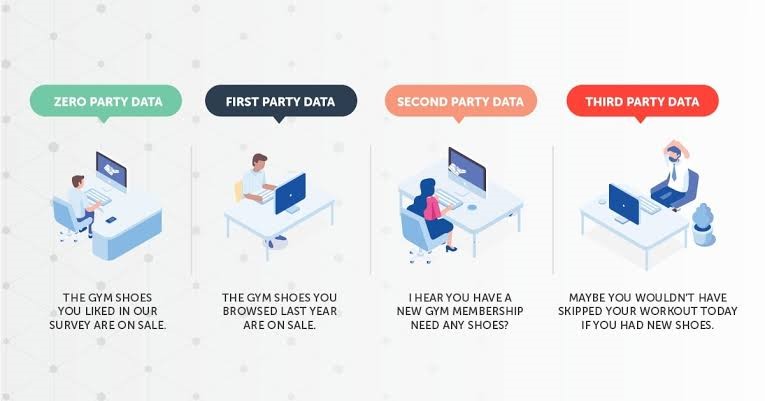
To win in this landscape, you must understand exactly what data you are collecting. Not all data is created equal.
|
Data Type |
How It Is Collected |
Level of Trust |
Example |
|
Third-Party Data |
Scraped by external trackers across unrelated websites. |
Zero. Users find it invasive and creepy. |
Ad networks tracking your shoe search history. |
|
First-Party Data |
Observed passively on your own digital properties. |
Medium. Helpful, but tells only part of the story. |
Tracking which website pages a user clicks on. |
|
Zero-Party Data |
Given intentionally and proactively by the customer. |
High. Built on explicit consent and transparency. |
A customer filling out a style preference quiz. |
The Key Difference: First-party data tracks behavior (what they clicked). Zero-party data captures intent (what they actually want).
Why Zero-Party Data is the Ultimate Business Moat
Relying purely on Meta or Google pixels means you are renting your audience. When the algorithm updates or ad costs skyrocket, your business takes a direct hit.
Building a zero-party data strategy flips the script. Here is why it works:
- Unmatched Accuracy: You don’t have to guess if a customer is looking for a gift or shopping for themselves based on a random click. They tell you directly.
- Hyper-Personalization: When you know a customer’s specific pain points, you can segment your email, SMS, and paid ad campaigns with laser precision.
- Bulletproof Compliance: Because the customer voluntarily hands over the information, you are completely insulated from evolving privacy penalties.
- Staggering Conversion Rates: Data shows that zero-party data collection campaigns achieve an average 61% conversion rate. Consumers want relevance; they just want to control how their data is used.
3 Creative Ways to Build Your Data Moat Today
You cannot expect users to fill out long, boring forms for no reason. To capture zero-party data, you must offer a fair value exchange—giving the user immediate utility, entertainment, or concrete value in return for their insights.
1. Interactive Recommendation Quizzes
Instead of making users scroll through hundreds of products or services, guide them through a 30-second quiz to find their perfect match.
- The Value Exchange: The customer gets an instant, tailored recommendation.
- The Data Moat: You capture their exact budget, product preferences, and current roadblocks.
2. Smart Preference Centres
Stop treating your email newsletter like a megaphone. When a user signs up or manages their settings, let them self-select the content they want to receive.
- The Value Exchange: The user avoids inbox clutter and only gets relevant deals or insights.
- The Data Moat: You learn their buying frequency, role, or specific interests without tracking a single cookie.
3. Gamified Content & Predictors
From predicting industry trends to lifestyle calculators, gamified touchpoints keep users engaged while opening up high-value data pipelines.
- The Value Exchange: The user receives a personalized scorecard, benchmark report, or entry into a premium giveaway.
- The Data Moat: You capture deep profile data that your competitors can only dream of guessing.
How to Activate the Data (Stop Letting It Sit in a Spreadsheet)
Collecting data is only half the battle. The real magic happens when you pipeline that data directly into your operations and growth engines.
1.Capture and Centralise:Step 1.
Embed low-friction quizzes or tools into your high-traffic web pages using clean UI/UX components. Ensure explicit consent check-boxes are integrated.
2.Sync Automatically to CRM:Step 2.
Route data directly into your Customer Relationship Management (CRM) platform. Tag the user profile automatically based on their answers (e.g., Tag: Industry_RealEstate, PainPoint_LeadGen).
3.Trigger Automated Lifecycle Flows:Step 3.
Set up instant automation. If a user states their biggest business challenge is “operational waste,” your CRM should immediately trigger a targeted email flow addressing that exact issue.
4.Feed Ad Platform Audiences:Step 4.
Upload your highly segmented, consented email lists directly to Meta and Google Customer Match. Use these to run hyper-specific retargeting or to build incredibly accurate lookalike audiences without relying on a web pixel.
Turn Your Customer Data Into a Growth Engine
The era of lazy “surveillance marketing” is officially over. The brands that win the next decade will be the ones that replace guesswork with real, permission-based conversations.
Building a zero-party data infrastructure isn’t just a defensive privacy play—it is a massive competitive advantage. By changing how you collect data, you stop chasing traffic and start scaling conversions.